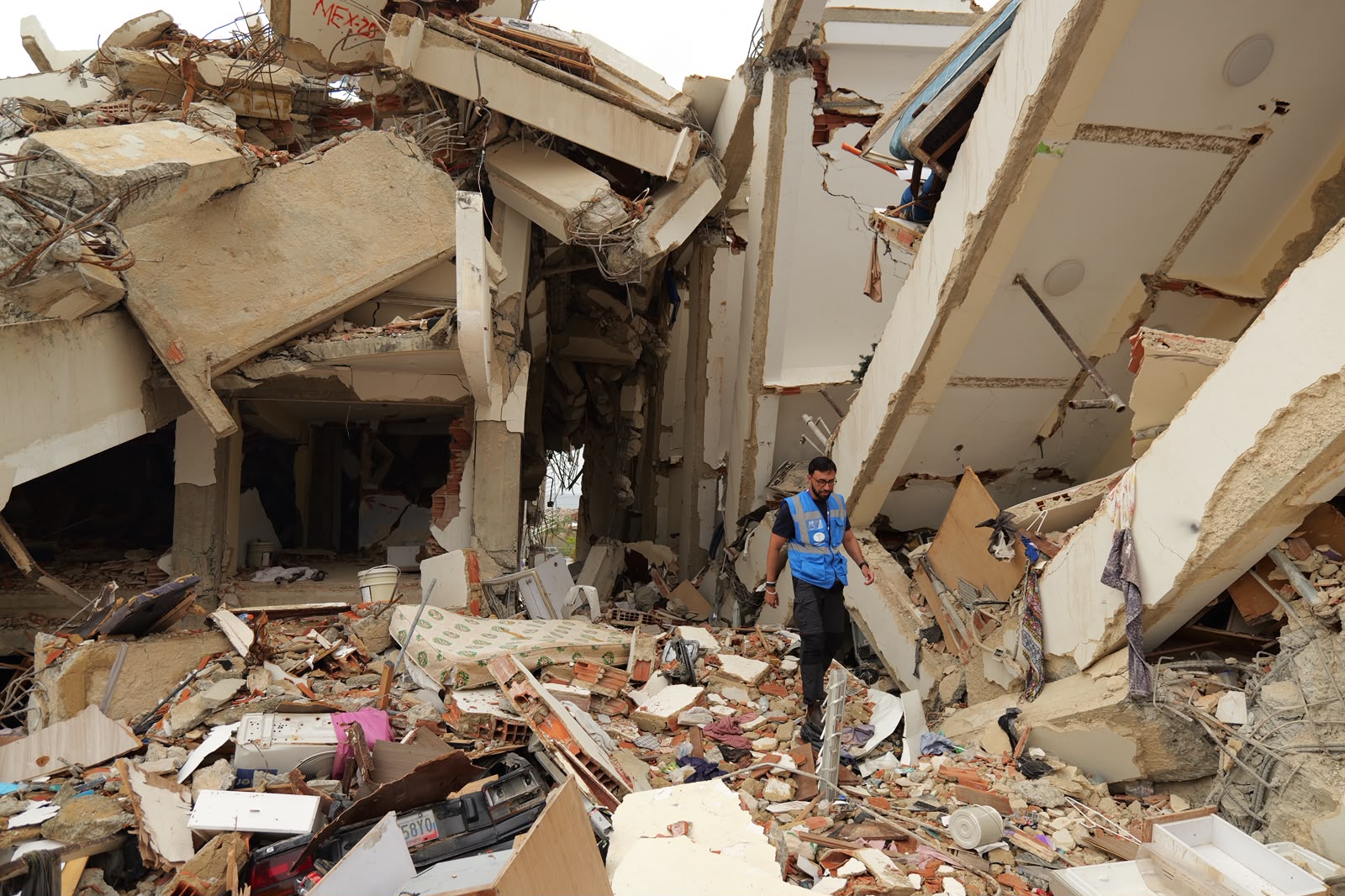
A Humanity First team spent five days assessing the earthquake response in La Guaira and Caracas and delivering medical, bedding and sanitation aid to displaced families.
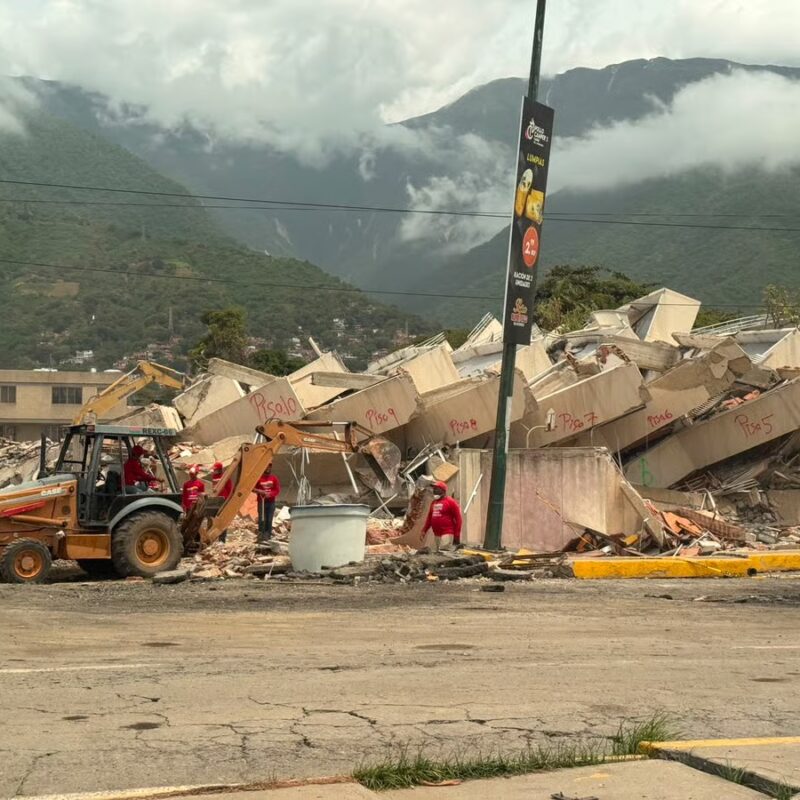
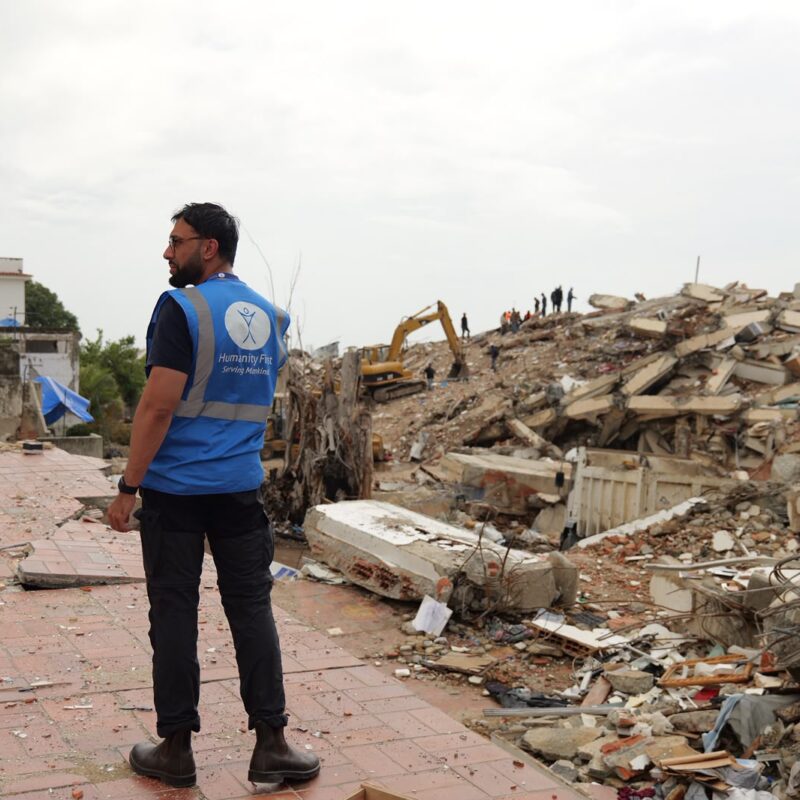
After a powerful earthquake struck Venezuela, Humanity First UK deployed a small team to carry out a rapid needs assessment on the ground, working in coordination with Humanity First USA.
Over five days the team travelled from Valencia to Caracas and on to La Guaira, the worst affected area, meeting humanitarian agencies and government officials, identifying the most urgent gaps and delivering humanitarian aid directly to displaced families. Here is how the mission unfolded.
The mission in numbers
- A rapid needs assessment across La Guaira and Caracas by the HFUK team in coordination with Humanity First USA
- Medical supplies to serve 200 displaced people directly for six months, reaching an estimated 36,000 across the wider area
- Bedding delivered to a camp of more than 2,000 people, including over 400 children and 26 pregnant women
- 350 sanitation packs procured for 2,200 displaced people
- Two ambulances provided by the Directorate of Civil Protection to move aid
This assessment is the first step, and the need on the ground is far from met. Your support lets our teams reach families the moment disaster strikes. Support our disaster relief work.
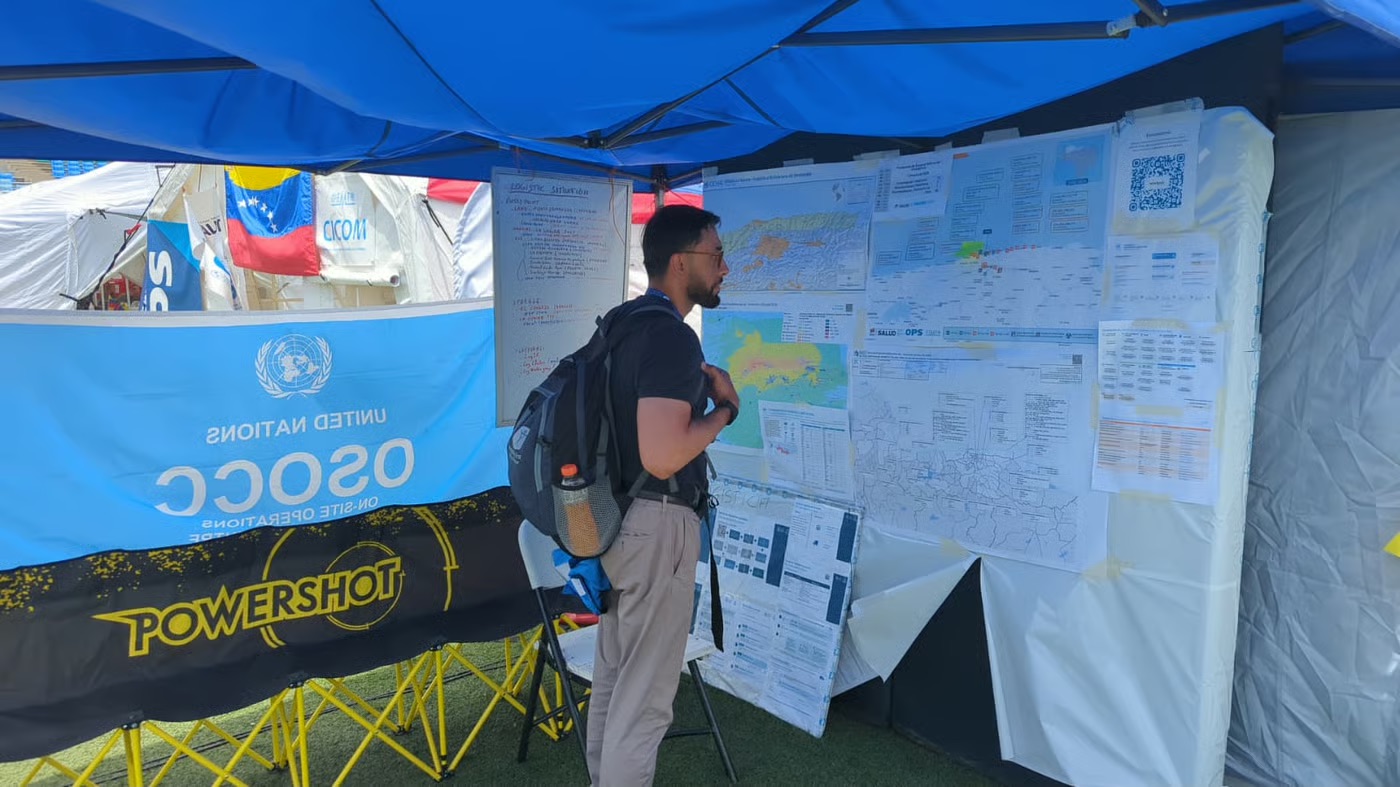
Day three: coordination and planning
The day focused on coordination, planning and refining the needs assessment. Four priorities came into focus:
- Search and rescue: the main gap on the ground.
- Specialised search and rescue assets: specifically requested by the government.
- Psychological support: particularly for vulnerable groups.
- Medical supplies: an ongoing need in the camps.
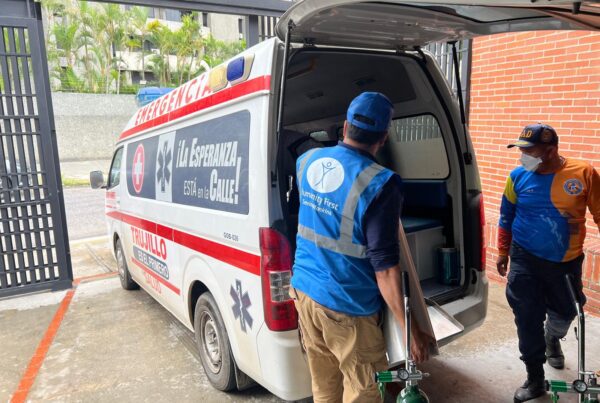
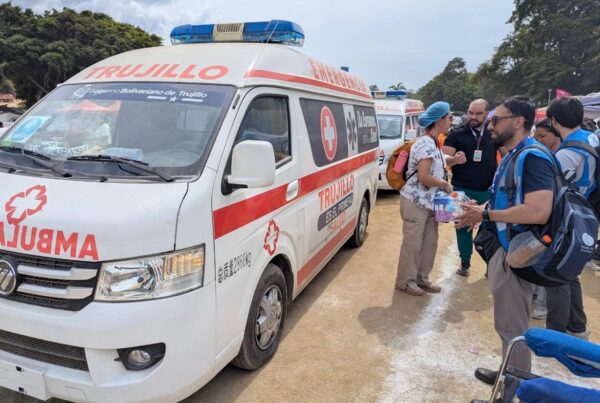
Civil Protection provided two ambulances to help move the medical supplies.
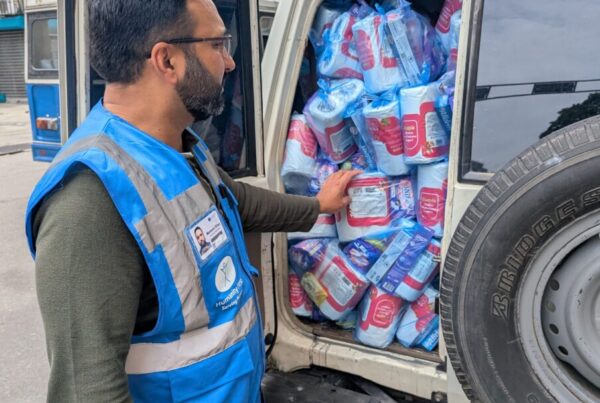
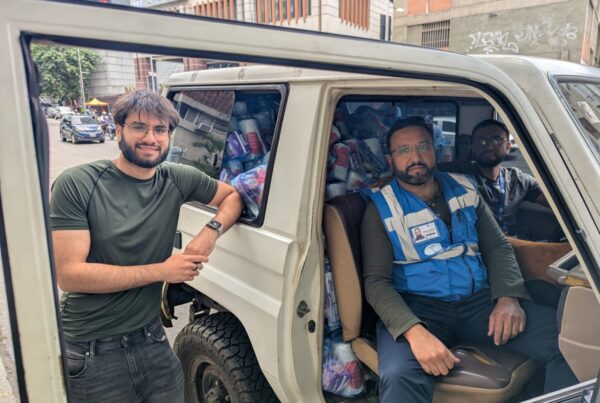
Delivering aid to the camps in La Guaira.
A second camp, home to more than 2,000 people including over 400 children and 26 pregnant women, was assessed the same day. The priority gaps were food, sanitation, hygiene and bedding.
Bedding was delivered to the whole camp before nightfall.
Day five: sanitation delivered
350 sanitation packs were delivered to serve 2,200 displaced people across the targeted camps.
With the deliveries complete, the team concluded the mission and departed Caracas for Valencia.